
menu


Neo Soul Cafe (video)

Honey Soul Music


ZDNet News

SnapFiles latest freeware additions and updates

SnapFiles - 20 latest freeware programs


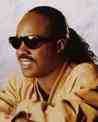
Stevie Wonder

Stevie Wonder

Stevie Wonder

Stevie Wonder (born Steveland Hardaway Judkins on May 13, 1950, name later changed to Steveland Hardaway Morris),[1] is an American singer, songwriter, and record producer. Wonder has recorded more than thirty Top 10 hits, won twenty-two Grammy Awards[2] (a record for a solo artist), plus one for lifetime achievement, he has won an Academy Award for Best Song and been inducted into both the Rock and Roll and Songwriters halls of fame. Opera star Luciano Pavarotti once referred to him in a concert as a "great, great musical genius". Blind from infancy, Wonder signed with Motown Records as an adolescent, and continues to perform and record for the label to this day. He has become one of the most successful and well-known artists in the world, with nine U.S. number-one hits to his name and album sales totaling more than 100 million units. Wonder has recorded several critically acclaimed albums and hit singles, and writes and produces songs for many of his labelmates and outside artists as well. A multi-instrumentalist, Wonder plays the drums, congas, bass guitar, organ, harmonica, piano and synthesizer. In his early career, he was best known for his harmonica work, but today he is better known for his keyboard skills. Contents[hide] 1 Early life 1.1 Early career, 1962–1971 1.2 Classic period, 1972–1976 1.3 Commercial period, 1979-1990 1.4 Later career, 1991-present 1.5 Impact 1.6 Personal life 2 Discography 2.1 U.S. and UK Top Ten singles 2.2 Top Ten U.S. and UK Albums 3 Pseudonymous work 4 Awards and recognition 5 Music sample 6 Cultural References 7 Notes 8 See also 9 External links // [edit] Early life Steveland Morris was born prematurely in Saginaw, Michigan to Lula Mae Hardaway on May 13, 1950 It is thought that he received excessive oxygen in his incubator which led to retinopathy of prematurity, a destructive ocular disorder affecting the retina, characterized by abnormal growth of blood vessels, scarring, and sometimes retinal detachment. Mrs. Hardaway instructed her other children (there would eventually be four boys and one girl in the home) to treat Steveland the same as any other child, and not to tease or over-assist him because of his blindness. As a result, Steveland had a balanced childhood. The family moved to Detroit, Michigan and Steveland began singing and playing instruments in church at an early age. He in particular took to the piano, congas, and harmonica at an early age. Wonder was educated at the Michigan School for the Blind in Lansing, Michigan where he was trained in classical piano. [edit] Early career, 1962–1971 In 1962, at the age of 12, Steveland Morris was introduced to Ronnie White of the popular Motown act The Miracles. White brought Morris and his mother to Motown Records. Impressed by the young musician, Motown CEO Berry Gordy signed Morris to Motown's Tamla label as Little Stevie Wonder. At the age of 13, Little Stevie Wonder had his first major hit, "Fingertips (Pt. 2)", a 1963 single taken from a live recording of a Motown Revue performance. The song, featuring Wonder on vocals, congas, and harmonica, and a young Marvin Gaye on drums, was a #1 hit on the US pop charts and launched him into the public consciousness. Dropping the "Little" from his moniker, Wonder went on to have a number of other hits during the mid-1960s, including "Uptight (Everything's Alright)", "With a Child's Heart", and "Blowin' in the Wind", a Bob Dylan cover which was one of the first songs to reflect Wonder's social consciousness. He also began to work in the Motown songwriting department, composing songs both for himself and his labelmates. By 1970, Wonder had scored more major hits, including "I Was Made to Love Her", "For Once in My Life", "My Cherie Amour", and "Signed, Sealed, Delivered I'm Yours". Besides being one of the first songs on which Wonder serves as both songwriter and producer, "Signed, Sealed, Delivered" is one of the main showcases for his backup group Wonderlove, a trio which included at various times Minnie Riperton, Deniece Williams, Lynda Laurence, and Syreeta Wright, whom Wonder married on September 14, 1970. Wonder and Wright divorced eighteen months later, but they continued to collaborate on musical projects. Besides Marvin Gaye, Stevie Wonder was one of the few Motown stars to contest the label's factory-like operation methods: artists, songwriters, and producers were usually kept in specialized collectives with little or no overlap, and artists had no creative control. Wonder argued with Berry Gordy over creative control a number of times. As a compromise, Motown released an album under the name "Eivets Rednow" (Stevie Wonder backwards). These arguments continued, and Wonder allowed his Motown contract to expire. He left the label on his twenty-first birthday in 1971. His final album before his departure was Where I'm Coming From, which Gordy had strongly fought against releasing. [edit] Classic period, 1972–1976 Wonder independently recorded two albums, which he used as a bargaining tool while negotiating with Motown. Eventually, the label agreed to his demands for full creative control and the rights to his own songs, and Wonder returned to Motown in March 1972 with Music of My Mind, an album which is considered a classic of the era. Unlike most previous artist LPs on Motown, which usually consisted of a collection of singles, b-sides, and covers, Music of My Mind was an actual LP, a full-length artistic statement, and began a string of five albums released over a period of less than five years, that make up what is generally considered Stevie Wonder's classic period. October 1972's Talking Book featured the #1 pop and R&B hit "Superstition", which is one of the most distinctive examples of the sound of the clavinet. The song, originally intended for rock guitarist Jeff Beck, features a rocking groove that garnered Wonder an additional audience on rock radio stations. That audience was further exposed to Wonder when he opened for The Rolling Stones on their much-heralded 1972 American Tour. Wonder's pop following was not neglected, however, as "You Are the Sunshine of My Life" followed to #1 on the pop charts and has been a staple love song for the decades since. Between them, the songs won three Grammy Awards. Wonder's critical and popular acclaim only increased less than a year later, in August 1973, when Wonder released what is often called his best album, Innervisions. Political considerations were brought into greater focus than ever before, with the driving, percolating "Higher Ground" (#4 on the pop charts) followed by the memorable epic "Living for the City" (#8), which found Wonder more evocatively describing a time and place in American life than he would anywhere else in his career. Popular ballads such as "Golden Lady" and "All in Love Is Fair" were also present, in a mixture of moods that nevertheless held together as a unified whole. The album generated three more Grammy Awards, including Album of the Year. On August 6, 1973, just days after the release of Innervisions, Wonder was in a serious automobile accident while on tour, when a log from a truck went through a passenger window and struck him in the head. This left him in a coma for four days and resulted in a permanent loss of his sense of smell. Despite the setback, Wonder eventually recovered all of his musical faculties, and reappeared in concert at Madison Square Garden in March 1974 in a performance that highlighted both up-tempo material and long, building improvisations on mid-tempo songs such as "Living for the City". The album Fulfillingness' First Finale then appeared in July 1974 with a more personal, introspective outlook, but nevertheless sent two hits high on the pop charts. The Album of the Year was again one of three Grammys won. On October 5, 1975, Wonder performed the historical Wonder Dream Concert in Kingston, Jamaica, a Jamaican Institute for the Blind benefit concert. Along with Wonder Bob Marley, Peter Tosh and Bunny Wailer, the three original "Wailers", performed together for the last time. By 1975, in his 25th year, Stevie Wonder had won two consecutive Grammy Awards: in 1974 for Innervisions and in 1975 for Fulfillingness' First Finale. The following year, singer songwriter Paul Simon won the Grammy for Album of the Year for Still Crazy After All These Years. In his Grammy acceptance speech, Simon jokingly thanked Stevie Wonder for not releasing an album that year. Simon's relief was short-lived, however; in 1977 Stevie Wonder re-took the best album Grammy Award for Songs In The Key Of Life. Wonder then focused his attentions on what he intended as his magnum opus, the double album-with-extra-EP Songs in the Key of Life, released in September 1976. Sprawling in style, unlimited in ambition, and sometimes lyrically difficult to fathom, the album was hard for some listeners to fully assimilate. Two tracks fairly jumped out of the radio with energy, however, becoming the #1 hits "I Wish" and "Sir Duke". "Isn't She Lovely" was a future wedding and bat mitzvah fixture, while songs such as "Love's in Need of Love Today" (which years later Wonder would perform at the post-September 11, 2001 America: A Tribute to Heroes telethon) and the classical "Village Ghetto Land" reflected a far more pensive mood. "Pastime Paradise" would become an interpolation for Coolio's "Gangsta's Paradise" (one of the most popular hits of the 1990s). Yet again Wonder was awarded Album of the Year, along with two other Grammys. Possibly exhausted by this concentrated and sustained level of creativity, Wonder was not heard from again for three years. Nevertheless his output during this stretch had left its mark: the 1983 Rolling Stone Record Guide said that these albums "pioneered stylistic approaches that helped to determine the shape of pop music for the next decade"; Rolling Stone's 2003 list of the 500 Greatest Albums of All Time included four of the five, with three in the top 90; while in 2005 Kanye West said of his own work, "I'm not trying to compete with what's out there now. I'm really trying to compete with Innervisions and Songs in the Key of Life. It sounds musically blasphemous to say something like that, but why not set that as your bar?"[3] [edit] Commercial period, 1979-1990 It was in Wonder's next phase that he began to commercially reap the rewards of his legendary Classic period. The 80's saw Wonder scoring his biggest hits and reaching an unprecendent level of fame- evidenced by increased album sales, charity participation, high-profile collaborations, and television appearances. This period had a muted beginning, for when Wonder did return, it was with a soundtrack album for the film Journey through the Secret Life of Plants (1979). Mostly instrumental, the album was panned at the time of its release but has come to be regarded by some critics as an unusual classic. Hotter than July (1980) became Wonder's first platinum selling album, and its single "Happy Birthday" was a successful vehicle for his campaign to establish Dr. Martin Luther King's birthday as a national holiday. The album also included "Master Blaster (Jammin')", his tribute to Bob Marley, and the sentimental ballad, "Lately", which was later covered by 1990s R&B act Jodeci. In 1982, Wonder released a retrospective of his '70s work with Stevie Wonder's Original Musiquarium and included three more hit singles in his catalogue, including the ten-minute funk classic "Do I Do" (which included legendary jazz trumpeter Dizzy Gillespie), "That Girl" (one of the year's biggest singles to chart on the R&B side) and "Ribbon in the Sky", one of his many classic compositions. Wonder also gained a #1 hit that year in collaboration with Paul McCartney in their paean to racial harmony, "Ebony and Ivory". 1984 saw the release of Wonder's soundtrack album for The Woman in Red. The lead single, "I Just Called to Say I Love You", was a #1 pop and R&B hit in both the US and UK, where it was placed 13th in the all-time list of best-selling singles in the UK issued in 2002. It went on to win an Academy Award for "Best Song" in 1985. The following year's In Square Circle featured the #1 pop hit "Part-Time Lover". He was also featured in Chaka Khan's cover of Prince's "I Feel For You", alongside Melle Mel, playing his signature harmonica, which was a huge hit. In roughly the same period he was also featured on harmonica on Eurythmics' single, "There Must Be An Angel (Playing With My Heart)." By 1985 Stevie Wonder was an American icon, the subject of good-humored jokes about blindness and affectionately impersonated by Eddie Murphy on Saturday Night Live. Thus it was only natural that he was in a featured duet with Bruce Springsteen on the all-star charity single for African famine relief, "We Are the World", and that he was part of another charity single the following year, the AIDS-targeted "That's What Friends Are For". Also in 1985, Wonder performed "Go Home" from his album In Square Circle, at the Grammy awards ceremony in Los Angeles in the infamous synthesizer jam along with Thomas Dolby, Howard Jones and Herbie Hancock. In 1986, Stevie Wonder appeared in The Cosby Show as himself. In 1987 Wonder appeared on the duet Just Good Friends for Michael Jackson's Bad album. [edit] Later career, 1991-present After 1987's Characters LP, Wonder continued to release new material, albeit at a slower pace. He recorded a soundtrack album for Spike Lee's film Jungle Fever in 1991, and released both Conversation Peace and the live album Natural Wonder during the same decade. In 1996, Stevie Wonder's Songs in the Key of Life was selected as a documentary subject for the Classic Albums documentary series. This series dedicates 60 minutes to one, groundbreaking record per feature. Stevie Wonder also performed in a unique remix of Seasons Of Love from the Jonathan Larson musical Rent which can be found on disc two of the cast original Broadway cast recording. In December 1999, Wonder announced that he was interested in pursuing an intraocular retinal prosthesis to partially restore his sight. [1] In March 2002, Wonder performed at the opening ceremonies of the 2002 Winter Paralympics in Salt Lake City. In 2004, Rolling Stone Magazine ranked him #15 on their list of the 100 Greatest Rock and Roll Artists of All Time.[4] Wonder's first new album in ten years, A Time to Love, was released on October 18, 2005, after having been pushed back from first a May, and then a June release. The album was released electronically on September 27, 2005, exclusively on Apple's iTunes Music Store. The first single, "So What the Fuss", was released in April and features Prince on guitar and background vocals from En Vogue. A second single, "From the Bottom of My Heart" was a hit on adult-contemporary R&B radio. The album also featured a duet with India Arie on the title track "A Time to Love". Wonder performed at the pre-game show for Super Bowl XL in Detroit in early 2006, singing various hit singles (with his four-year-old son on drums) and accompanying Aretha Franklin during "The Star Spangled Banner". In March 2006, Wonder received new national exposure on the top-rated American Idol television program. Each of 12 contestants were required to sing one of his songs, after having met and received guidance from him. (Some of the contestants idolized Wonder, while others showed little familiarity with his work.) Wonder also performed "My Love Is on Fire" live on the show itself. Most recently, in June 2006, Stevie Wonder made a guest appearance on Busta Rhymes' new album, The Big Bang on the track "Been through the Storm" he sings the refrain and plays the piano on the Dr. Dre and Sha Money XL produced track. He appeared again on the last track of Snoop Dogg's new album, Tha Blue Carpet Treatment, "Conversations". The song is a remake of "Have a Talk with God" from Songs in the Key of Life. It is also rumored that he will appear on Bone Thugs-n-Harmony's new album, Strength and Loyalty. Stevie Wonder also performed at the Nation's Capitol's 2006 "A Capitol Fourth" celebration, which was hosted by actor star Jason Alexander. [edit] Impact Wonder's success as a socially conscious musical performer was significantly influential to both R&B and pop music. Among the musicians and performers who list Wonder as one of their major influences are Gloria Estefan, Alicia Keys, Avia, Mariah Carey, Tim Foreman (Switchfoot), Mary J. Blige, Kanye West, George Michael, Jermaine Jackson, Michael Jackson, Nik Kershaw, Anthony Kiedis (Red Hot Chili Peppers), India.Arie, Musiq Soulchild, John Legend, Jason Kay (Jamiroquai), Donell Jones, and the members of Jodeci, Maroon 5, the Neptunes, Dru Hill, Babyface, BeyoncĂ© Knowles, Nicholas Jonas (Jonas Brothers) and Aaliyah. Wonder's songs are renowned for being hard and demanding to sing. There are many 9th, 11th and 13th chords. His melodies make abrupt, unpredictable changes. His songs are melismatic, meaning that a syllable of a word is sung over different notes. In the American Idol Hollywood Performances, judge Randy Jackson repeatedly stated the difficulty of Wonder's songs. Some of his best known and most frequently covered songs are in unusual keys for bands. For example, Superstition, Higher Ground and I Wish are all in the key of E flat, and all feature distinctive riffs that can be played mostly on the black notes of a keyboard. [edit] Personal life Mandla Kadjay Carl Stevland Morris, was born on May 13, 2005, and is the second child of Wonder and his current wife, fashion designer Kai Milla Morris. He is an active supporter of the United States Democratic Party. Stevie Wonder was a social activist during the Civil Rights Movement. Stevie Wonder was born in 1950, and when he was in high school the desegregation laws were already taking effect. Therefore he never took part in any major protests or sit-ins promoting the desegregation of schools, businesses, and restaurants in the US. [edit] Discography Main article: Stevie Wonder discography [edit] U.S. and UK Top Ten singles Thirty-four of Stevie Wonder's singles, listed below, reached the Top Ten on Billboard's Hot 100 chart in the United States, or in the United Kingdom. 1963: "Fingertips - Part 2" (U.S. #1) 1965: "Uptight (Everything's Alright)" (U.S. #3) 1966: "Blowin' in the Wind" (U.S. #9) 1966: "A Place in the Sun" (U.S. #9) 1967: "I Was Made to Love Her"(U.S. #2, UK #5) 1968: "For Once in My Life" (U.S. #2, UK #3) 1968: "Shoo-Be-Doo-Be-Doo-Da-Day" (U.S. #9) 1969: "My Cherie Amour" (U.S. #4, UK #4) 1969: "Yester-Me, Yester-You, Yesterday" (U.S. #7, UK #2) 1970: "Never Had A Dream Come True" (UK #6) 1970: "Signed, Sealed, Delivered I'm Yours" (U.S. #3) 1970: "Heaven Help Us All" (U.S. #9) 1971: "If You Really Love Me" (U.S. #8) 1972: "Superstition" (U.S. #1) 1973: "You Are the Sunshine of My Life" (U.S. #1, UK #7) 1973: "Higher Ground" (U.S. #4) 1973: "Living for the City" (U.S. #8) 1974: "He's Misstra Know It All" (UK #10) 1974: "You Haven't Done Nothin'" (with The Jackson 5) (U.S. #1) 1974: "Boogie On Reggae Woman" (U.S. #3) 1977: "I Wish" (U.S. #1, UK #5) 1977: "Sir Duke" (U.S. #1, UK #2) 1979: "Send One Your Love" (U.S. #4) 1980: "Master Blaster (Jammin)" (U.S. #5, UK #2) 1980: "I Ain't Gonna Stand For It" (UK #10) 1981: "Lately" (UK #3) 1981: "Happy Birthday" (UK #2) 1982: "That Girl" (U.S. #4) 1982: "Do I Do" (UK #10) 1982: "Ribbon in the Sky" (U.S. #54 pop, #10 R&B) 1984: "I Just Called to Say I Love You" (U.S. #1, UK #1) 1985: "Part-Time Lover" (U.S. #1, UK #3) 1985: "Go Home" (U.S. #10) [edit] Top Ten U.S. and UK Albums Twelve of Stevie Wonder's albums, listed below, reached the Top Ten in either the United States or the United Kingdom. 1963: Recorded Live: The 12 Year Old Genius (U.S. #1) 1972: Talking Book (U.S. #3) 1973: Innervisions (U.S. #4, UK #8) 1974: Fulfillingness' First Finale (U.S. #1, UK #5) 1976: Songs in the Key of Life (U.S. #1, UK #2) 1979: Journey through the Secret Life of Plants Soundtrack (U.S. #4, UK #8) 1980: Hotter than July (U.S. #3, UK #2) 1982: Stevie Wonder's Original Musiquarium (U.S. #4, UK #8) 1984: The Woman in Red Soundtrack (U.S. #4, UK #2) 1985: In Square Circle (U.S. #5, UK #5) 1995: Conversation Peace (UK #8) 2005: A Time to Love (U.S. #5) [edit] Pseudonymous work In 1968, he recorded an album of instrumental jazz tracks, mostly harmonica solos, under the pseudonym (and title) "Eivets Rednow", which is "Stevie Wonder" spelled backwards. The album failed to get much attention, and its only single, a cover of "Alfie", only reached number 66 on the US Pop charts and number 11 on the US Adult Contemporary charts. It was reissued briefly on compact disc in 1995, and is now a much sought-after collectible. [edit] Awards and recognition Wonder has received 22 Grammy Awards:[5] Year Award Title 1974 Best Rhythm & Blues Song "Superstition" 1974 Best R&B Vocal Performance, Male "Superstition" 1974 Best Pop Vocal Performance, Male "You are the Sunshine of My Life" 1974 Album of the Year Innervisions 1975 Best Rhythm & Blues Song "Living for the City" 1975 Best Male R&B Vocal Performance "Boogie On Reggae Woman" 1975 Best Male Pop Vocal Performance Fulfillingness' First Finale 1975 Album of the Year Fulfillingness' First Finale 1977 Best Male R&B Vocal Performance "I Wish" 1977 Best Male Pop Vocal Performance Songs in the Key of Life 1977 Best Producer of the Year N/A 1977 Album of the Year Songs in the Key of Life 1986 Best Male R&B Vocal Performance In Square Circle 1987 Best Pop Performance By A Duo Or Group With Vocal(awarded to Dionne Warwick, Elton John, Gladys Knight, and Wonder) "That's What Friends Are For" 1996 Best Rhythm & Blues Song "For Your Love" 1996 Best Male R&B Vocal Performance "For Your Love" 1999 Best Instrumental Arrangement Accompanying Vocal(s)(awarded to Herbie Hancock, Robert Sadin, and Wonder) "St. Louis Blues" 1999 Best Male R&B Vocal Performance "St. Louis Blues" 2003 Best R&B Performance By A Duo Or Group With Vocals(awarded to Wonder and Take 6) "Love's in Need of Love Today" 2006 Best Male Pop Vocal Performance "From the Bottom of My Heart" 2006 Best R&B Performance By A Duo Or Group With Vocals(awarded to BeyoncĂ© and Wonder) "So Amazing" 2007 Best Pop Collaboration With Vocals (awarded to Tony Bennett and Wonder) "For Once In My Life" Wonder has also received an Academy Award for Best Song for "I Just Called to Say I Love You" from The Woman in Red. In 1989, Wonder was inducted to the Rock and Roll Hall of Fame. He is also an inductee to the Songwriters Hall of Fame. Wonder received the Polar Music Prize and Kennedy Center Honors in 1999. In 2002, he was presented with the George and Ira Gershwin Lifetime Achievement Award at UCLA's Spring Sing. He was awarded the Billboard Music Award for the Century Award in 2004, and was one the first inductees into the Michigan Walk of Fame.

thegroove"s Podcast

Showing posts with label divas. Show all posts

Thursday, 3 May 2007

Chaka Khan


Chaka Khan (born Yvette Marie Stevens on March 23, 1953 in Great Lakes, Illinois) is an American singer best known for her 1984 cover of Prince's "I Feel For You", for her smash hit "I'm Every Woman" and as a member of the funk band Rufus, with whom she recorded the legendary soul record "Ain't Nobody". In her career she has earned many accolades, including eight Grammy awards. Though regarded an R&B singer, she has in fact explored numerous musical genres including funk, disco, jazz, ballads, hip hop, adult contemporary and pop standards.[edit]
Early life
Khan was raised on Chicago's South Side, and at the age of 11 formed her first group, the Crystalettes. While still in high school, she joined the Afro-Arts Theater, a group which toured with Motown great Mary Wells; a few years later, she adopted the African name "Chaka" while working as a volunteer on the Black Panthers' Free Breakfast for Children program. After quitting high school in 1969, Khan joined the group Lyfe, soon exiting to join another dance band, The Babysitters; neither was on the fast track to success, but her fortunes changed when she teamed with ex-American Breed member Kevin Murphy and Andre Fisher to form Rufus.

[edit] Life with Rufus
Debuting in 1973 with a self-titled effort on the ABC label, Rufus was among the pre-eminent funk groups of the decade; distinguished by Khan's dynamic vocals. With the help of Stevie Wonder, Rufus broke into both the pop music and R&B charts in 1974 with the hit "Tell Me Something Good". Throughout the 1970s and early 1980s, the band had a number of R&B hits, including "Tell Me Something Good", "Masterjam", "Sweet Thing", "Do You Love What You Feel?", and "Once You Get Started". The group earned half a dozen gold or platinum albums and two gold singles with "Tell Me Something Good" and "Sweet Thing" before she went solo in 1978.

[edit] Solo Stardom
In 1978, Khan recorded her highly-orchestrated Arif Mardin-produced disco smash hit "I'm Every Woman" (#1 R&B and #21 Pop, and a bigger Pop hit over a decade later for Whitney Houston), from the album Chaka. Chaka proved to be a significant hit on the strength of the single (which was composed by Ashford & Simpson) however, Khan's success was somewhat tempered by her public rivalry with the remaining members of Rufus, to whom she was contractually bound for two more LPs.
As a solo artist, Khan recorded backing vocals for Ry Cooder's 1979 effort "Bop Till You Drop," then cut her sophomore album, 1980's Naughty, a minor hit on the R&B charts, which featured 'Clouds' (also by Ashford & Simpson), 'Move Me No Mountain', and other songs that displayed Chaka's range as a singer. The 'Naughty' album also featured Luther Vandross, Cissy Houston, and a young Whitney Houston singing background vocals.
Her next album, What Cha' Gonna Do for Me ?, was a gold seller and included at least two hit singles on Billboard's R&B Singles chart, including the title song (which topped the R&B chart and made #53 Pop). Chaka's 'Night In Tunisia (The Melody Remains The Same)' is also a timeless classic (featuring Dizzy Gillespie & Herbie Hancock) from the album, which has Chaka hitting 'notes that aren't in the book' (according to her legendary producer Arif Mardin).
In 1982, Warner Brothers released the Arif Mardin produced 'Chaka Khan' album. This album featured the single 'Tearin It Up', as well as Chaka's reading of Michael Jackson's 'Got To Be There'. 'Slow Dancin' (a duet with the late Rick James) was also featured, but her 'Be Bop Medley' won the Diva a Grammy Award, as well as praise from jazz legend Betty Carter, who praised Chaka for her improvisational skills. 'Chaka Khan' was critically acclaimed, but it was not the huge hit that Warner Brothers wanted. The CD edition of 'Chaka Khan' is a rare collector's item because Warner Brothers refuses to release it in the United States. Fans can expect to pay almost $100.00 for mint CDs imported from Japan.

[edit] A jazz experiment
In 1982, Khan recorded Echoes Of An Era, a collection of jazz standards featuring performances from Freddie Hubbard, Joe Henderson, Stanley Clarke, Chick Corea and Lenny White. 1983 saw Khan return to Rufus to record her last contractually obligated album Stompin' At The Savoy: Live. The double album contained live versions of Rufus classics, Khan's solo hits and a handful of newly recorded tracks. One of these was the hit "Ain't Nobody," which returned Khan to the top of the urban and top 40 charts (#22 Pop). To make room for the new studio tracks, Warner Brothers omitted live versions of "Everlasting Love" (which was released on the rare 1983 soundtrack to Night Shift), "The Best Of Your Heart" and "Hollywood".

[edit] Hip hop phenomenon
Her pop career was on shaky ground when she released 1984's I Feel For You, a platinum-seller launched by its title cut, a Grammy-winning, hip hop-based rendition of a fairly obscure Prince album track with a cameo appearance by Stevie Wonder on harmonica and rap by Melle Mel, which launched her recording career back into full gear. Produced by David Foster, the popular ballad "Through The Fire" also reached the R&B top ten, setting a record (since broken) for spending the most consecutive weeks on the Billboard R&B chart, made #60 Pop during a 19-week run on the Hot 100, and crossed over to the adult contemporary chart. "Through The Fire" has since been sampled by Kanye West for his hit single "Through The Wire". Chaka also recorded 'Krush Groove (Can't Stop The Street)' for the movie Krush Groove in 1985.

[edit] 1990s to now
Still, while subsequent LPs like 1986's Destiny and 1988's C.K. kept Khan high on the R&B charts, her standing in pop's mainstream again began to wane, and by the end of the 1980s she had moved to Europe. Not forgotten back in America, in 1990, she won another Grammy for "I'll Be Good To You," a duet with Ray Charles and another #1 R&B and Top 20 Pop hit.
In 1992, Khan released her album The Woman I Am, for which she received a Grammy award for best Rhythm & Blues vocal performance. The album's hit single "Love You All My Lifetime" was penned by German songwriter duo Irmgard Klarmann and Felix Weber and was produced by David Gamson. According to the Chaka's World Website, Khan recorded a follow up album Dare You To Love Me which was to be released in 1995. Warner Brothers shelved the project (although several of the tracks appeared on a career retropsective titled Epiphany: The Very Best of Chaka Khan and soundtracks such as To Wong Foo, Thanks For Everything, Julie Newmar and Waiting to Exhale (singing the standard "My Funny Valentine").
Khan soon left Warner Brothers because of a lack of promotion[citation needed] and after the label had decided to release the Epiphany compilation instead of Dare You To Love Me in its true form[citation needed]. Prince (who also feuded with the company) assisted Khan in leaving Warner Brothers. Khan eventually made a special agreement with "The Artist" (who was then only formerly known as Prince), and recorded her next album on his New Power Generation label.
The Prince-produced Come 2 My House appeared in 1998, and went gold[citation needed] despite little or no promotion. Khan also appeared on new CDs by Prince and Larry Graham for the New Power Generation Label, and toured in support for the projects. In 2001, Khan sang on De La Soul's hit song "All Good?". In 2002 she was an integral part of the documentary about Motown studio musicians The Funk Brothers, Standing In The Shadows Of Motown, which she performed the classic R&B songs "What's Going On?" (she won her 8th Grammy Award for this performance) and the last live song performed in the film, "Ain't No Mountain High Enough" (a duet with Montell Jordan).
In October 2004, Khan released her cover album ClassiKhan by her own label Earth Song Records and Sanctuary Records. An album of standards featuring the London Symphony Orchestra and recorded primarily at Abbey Road Studios in London. The entire album was Produced by Eve Nelson of Nelson-O'Reilly Productions who also conducted the London Symphony Orchestra.
On December 3, 2004, she received an honorary doctorate degree from Berklee College of Music. She is also active in the autism community as she has family members who have been diagnosed. Her EarthSong Entertainment and Chaka Khan Foundation operate from Beverly Hills, California. She continues to record and perform with her distinctive and powerful voice.

[edit] Recent
In early 2006, she signed with Sony BMG's new label Burgundy Records to release her upcoming studio cover album set I-Khan Divas in 2007. Also, Khan, who has recently embraced Christianity, participated in a live all-star gospel concert recording for artist Richard Smallwood's new album Journey: Live In New York. Khan is featured on the song "Oh, How Precious." [1]
On February 11, 2007 Khan headlined and performed at the NARAS 2007 Grammy Award official post party held immediately after the event at the Los Angeles convention center.

[edit] Miscellany
The name "Chaka" comes from the historical figure Chaka Bey.
On her official website, Khan credits singer Karen Clark Sheard with being "the voice that helped me find the Holy Ghost". She performed a live cover of Sheard's "A Secret Place" along with Richard Smallwood on TBN's popular show Praise The Lord in October 2006.
She was only 20 when she joined Rufus.
She showcased her vocal talents as the choir soloist in the 1980 film The Blues Brothers.
Featured on Rick Wakeman's album 1984.
Featured on Stevie Winwood's "Higher Love". Khan sang and produced the background vocals.
According to the 'Chaka's World' website, Chaka was originally scheduled to duet on Tom Browne's hit "Funkin' For Jamaica" and Dennis Edwards' hit "Don't Look Any Further" (which he went on to perform with Siedah Garrett). She also recorded the song "Addicted to Love" with Robert Palmer. Her vocals were later removed after her management refused to allow its release.
Although she sang at both the 2000 Democratic and Republican conventions, Khan says that she is more of a "Democratic-minded person." [2]
Good friends with the Bee Gees.
Recorded the newest version of the Reading Rainbow theme song. Episodes recorded from 2000 bear her version.
Favorite rapper is Busta Rhymes.
Yummy Bingham is her goddaughter.
In an episode of Shooting Stars Khan was named as an artist whose name sounded like an animal noise

[edit] Awards

[edit] Wins
2006 BET Lifetime Achievement Award
To date, she has won eight Grammy Awards:
2002 Best Traditional R&B Vocal Performance - "What's Going On" by Chaka Khan & The Funk Brothers
1992 Best R&B Vocal Performance, Female - "The Woman I Am"
1990 Best R&B Performance By A Duo Or Group With Vocal - "I'll Be Good To You" (with Ray Charles)
1984 Best R&B Vocal Performance, Female - "I Feel For You"
1983 Best R&B Vocal Performance, Female - Chaka Khan
1983 Best R&B Performance By A Duo Or Group With Vocal "Ain't Nobody"
1983 Best Vocal Arrangement For Two Or More Voices - "Be Bop Medley"
1974 Best R&B Vocal Performance By A Duo, Group Or Chorus - "Tell Me Something Good"
She has won four American Music Awards.

[edit] Nominations
She has had 19 Grammy nominations including a recent nomination for "Everyday (Family Reunion)", her collaboration with Yolanda Adams, Gerald Levert, and Carl Thomas from the Madea's Family Reunion movie.[3]

Dionne Warwick


Born to parents Mansel Warrick and Lee Drinkard in East Orange, New Jersey, Dionne Warrick began singing gospel with her family (including younger sister Delia, known professionally as Dee Dee Warwick), and started her professional career after graduating from the Hartt College of Music in Hartford, Connecticut, from which she now holds a Doctorate. In the earliest stage of her career, she sang backing vocals along with Dee Dee on records by Chuck Jackson, Dinah Washington and Solomon Burke, among others.
Her first solo single for Scepter Records was released in November, 1962. The song was entitled "Don't Make Me Over", the title (according to legend) supplied by Warrick herself when she snapped the phrase at producers Burt Bacharach and Hal David. Warwick became incensed and shouted the phrase when she found a song she wanted to record, "Make It Easy on Yourself" had been given to another artist, Jerry Butler. From the phrase, Bacharach and David created an elegant R&B recording, which became a top 40 pop hit in the US (and a top 5 US R&B hit.) Famously, Warrick's name was misspelled on the credits, and she soon began using the new spelling (i.e., "Warwick") both professionally and personally.[1]
The two immediate follow-ups to "Don't Make Me Over" were largely unsuccessful, but 1964's "Anyone Who Had a Heart" was Warwick's first top 10 pop hit. This was followed by "Walk on By", a major hit that launched her career into the stratosphere. For the rest of the 1960s, Warwick was a fixture on the US and Canadian charts, and virtually all of Warwick's singles from 1962-1972 were written and produced by the Bacharach/David team.
In fact, Warwick weathered the British Invasion better than most American artists, although she released only a few hits in the UK during the late 1960s, most notably "Walk On By" and "Do You Know the Way to San Jose". In the UK a number of Bacharach-David-Warwick songs were covered by UK singer Cilla Black, most notably "Anyone Who Had a Heart", which went to #1 in the UK. This upset Warwick and she has described feeling insulted when told that in the UK, record company executives wanted her songs recorded by someone else. Warwick even met Cilla Black whilst on tour in the UK. She recalled what she said to her - " I told her that "You're My World" would be my next single in the States. I honestly believe that if I'd sneezed on my next record, then Cilla would have sneezed on hers too. There was no imagination in her recording." [1]
"You're My World" was, in fact, not released as a single by Warwick -- but it did appear on a later album, Dionne Warwick in Valley of the Dolls. Black, however, went ahead with the single release of "You're My World" in 1964 and the track peaked at #1 UK, #26 US.

[edit] The late 1960s and early 1970s
The late 1960s and early 1970s became a very successful time period for Warwick, who saw a string of Gold selling albums and Top 20 and Top 10 hit singles. The 1967 LP called Here Where There Is Love became a big hit for Warwick, as did her single "I Say a Little Prayer" (on her album The Windows of the World).
Her next big hit was unusual in that it was not written by Burt Bacharach and Hal David, and it was a song that she almost didn't record. While the film version of "Valley of the Dolls" was being made, actress Barbara Parkins suggested that Warwick be considered to sing the film's theme song, written by songwriting team Andre and Dory Previn. The song was to be given to Judy Garland who had been fired from the film. Warwick performed the song, and when the film became a success in the early weeks of 1968, the public wanted a recording of the theme. As such, "(Theme From) Valley of the Dolls" was a smash success, as was the Bacharach/David-penned follow-up, "Do You Know the Way to San José". More hits followed in the last two years of the 1960s.
Warwick had become the priority act of Scepter Records with the release of "Anyone Who Had a Heart" in 1963. However, in the post-Woodstock era of the late 1960s, the decision was made that she would begin looking for a major label. Warwick's last recording for Scepter was in 1971. She debuted on Warner Bros. Records -- in a five-year contract that was the biggest contract for a female artist at that time.
Warwick was signed to Warners with Bacharach and David as writers/producers; however, after the "Lost Horizon" disaster of 1973, the songwriting duo not only wasn't working together, they weren't even speaking. While this situation worked itself out in the courts, Warwick would team with a variety of producers, looking for an elusive hit.
Warwick was advised by numerologist Linda Goodman in 1971 to add an "e" to her last name, making Warwick "Warwicke" for good luck. The extra "e" brought more bad luck than good, and the singer removed it in 1975.

[edit] Move to Arista
Her career slowed greatly in the 1970s, with no big hits until 1974's "Then Came You", recorded as a duet with the Spinners and produced by Thom Bell. It was her first US #1 hit on the Billboard Hot 100. Nevertheless, other than this success, Warwick's five years on Warner Bros. Records -- despite the fact that she worked the entire time -- left her almost completely without hits. There were a few quality, but lesser known Disco hits such as "Track of the Cat" and "Once You Hit The Road" -- both of which were produced in 1975 and 1976, respectively, by Thom Bell.
Warwick recorded five albums with Warners: "Dionne", produced by Bacharach and David; "Just Being Myself", produced by Holland-Dozier-Holland; "Then Came You", produced by Jerry Ragavoy; "Track of the Cat", produced by Thom Bell; and "Love at First Sight", produced by Steve Barri and Michael Omartian. The singer's five-year contract with Warners was up for renewal in 1977, and with that, Warwick gladly ended her stay at the label.
This trend ended with the move to a new label and the release of "I'll Never Love This Way Again" in 1979. The song was produced by Barry Manilow. The accompanying album Dionne (not to be confused with the Warner Bros. album of the same name) was her first to go platinum. This was her debut on Arista Records, to which she had been personally signed and guided by the label's founder Clive Davis. Her 1980 album, No Night So Long was not quite as strong but featured the quality title track which became a major hit.
Warwick's next big hit was her 1982 full-length collaboration with Barry Gibb of The Bee Gees for "Heartbreaker". Her previous hit was the duet "Friends In Love" recorded with Johnny Mathis, her good friend and fellow musical legend.
In 1983, Dionne issued one of her finest albums during her time with Arista, titled, "How Many Times Can We Say Goodbye" which was produced by Luther Vandross. Their collaboration had been a lifelong dream of Vandross, who had maintained that he wanted to work with Warwick, Aretha Franklin, and Diana Ross. The album's most successful single became the beautifully emotive, title track, "How Many Times Can Say Goodbye", a duet with Warwick, which despite the production by Vandross, only peaked at #27 on the Billboard Hot 100. The second single, the Dance-pop song "Got a Date", became a moderate hit on the R&B chart. The album only peaked at Number 57 on the Billboard Top 200 album chart, but it did fare better on the R&B chart. Still, however, it was not as commercially successful as the Heartbreaker album the previous year. Warwick would not release another studio album until two years later, 1985's Finder of Lost Loves -- an album that would reunite her with both Barry Manilow and Burt Bacharach.
In 1985, Warwick contributed her voice to the Multi-Grammy award winning charity song: We Are The World, along with vocalists like Michael Jackson, Lionel Richie, Tina Turner and Diana Ross.
In 1986, Warwick led the American Foundation for AIDS Research (AmFAR) benefit single "That's What Friends Are For" with Friends (Gladys Knight, Elton John, and Stevie Wonder); it was a number one hit, and garnered Warwick's fifth Grammy Award. It also marked a reunion of Warwick and song co-writer Burt Bacharach (lyrics by Carole Bayer Sager).
In late 1987, Dionne scored another pop hit and Top 10 R&B chart hit with the song, "Love Power", a duet with Jeffrey Osborne. This song, another written by Bacharach and Carole Bayer Sager, was featured in Warwick's album "Reservations for Two".

[edit] Host of Solid Gold
In January 1980, while under contract to Arista Records, Dionne Warwick hosted a two-hour TV special called Solid Gold '79. This was adapted into the weekly one-hour show Solid Gold, which she hosted throughout 1980 and again in 1985-86.

[edit] 1990s to present
Her career took an unexpected major downturn in the 1990s, with only a few moderate-selling albums released and no major singles. Her most well-received album in 1993 was an effort entitled "Friends Can Be Lovers", which was produced in part by Ian Devaney and Lisa Stansfield. Prominently featured on the album was a tune called "Sunny Weather Lover", which was the first song that Burt Bacharach and Hal David had written together in exactly twenty years from the song's release. It was Warwick's lead single in the US, heavily promoted by Arista, which unfortunately did not reach the Top 40. A follow-up, the steamy, sensual "Where My Lips Have Been" also failed to make the Top 40. During this period, she was perhaps best known for hosting infomercials for the Psychic Friends Network, a 900 number psychic service.
In 2002, Warwick was arrested at Miami International Airport for possession of marijuana. Miami-Dade Police officers reported finding eleven marijuana cigarettes inside a lipstick container. Drug charges were dropped when she agreed to complete a drug treatment program, donate $250 to charity and make an anti-drug public service announcement directed at youth. [2]. Dionne maintains that the cigarettes were dropped in an open bag she was carrying.
In 2005, Dionne Warwick was honored by Oprah Winfrey at her Legends Ball.
Warwick enjoyed one of her largest audiences ever when she appeared on the May 24, 2006 fifth-season finale of American Idol.[citation needed] 36 million U.S. viewers watched Warwick sing a medley of "Walk on By" and "That's What Friends Are For", with longtime collaborator Burt Bacharach accompanying her on the piano.
In 2006, Warwick released My Friends and Me, a duets album on which she sang with various female singing stars, on thirteen of her old hits. It is her first album for the label, Concord Records. The album was produced by her son, Damon Elliott. Among her singing partners were Gloria Estefan, Olivia Newton-John, Wynonna Judd and Reba McEntire. The album's sales have been decent, becoming her first album to make the charts since 1993's critically acclaimed album Friends Can Be Lovers, as mentioned above. The album My Friends & Me peaked at #66 on the Top R&B/Hip-Hop Albums chart. Warwick is currently on a world Tour (she has just visited New Zealand and was a huge success with all concerts a sell out).

[edit] Famous relations
Warwick's sister Dee Dee Warwick also had a successful singing career, scoring a Top 20 R&B hit in the form of "I'm Gonna Make You Love Me" in 1967. In 1971, at the advice of a numerologist, both Dionne and her sister Dee Dee added an "e" to the end of Warwick (thus making their professional last names "Warwicke"). The "e" was eventually dropped in mid-1975.
Warwick's mother, Lee Drinkard, along with many of Warwick's uncles and aunts, were members of The Drinkard Singers, a noted gospel music group which lasted from the 1940s through the 1990s.
One of Warwick's cousins is Whitney Houston.

Whitney Houston


Whitney Elizabeth Houston (born on August 9, 1963), is an American R&B/pop singer, actress, former fashion model, record and film producer. Houston is one of the most successful pop singers of all time, having sold over 200 million records worldwide. Her body of work includes ballads, dance-pop and urban contemporary soul. She is well known for her vocal power, control, range and coloratura soprano voice,[1] thus often being known by the title "The Voice".[citation needed]
Houston was one of the first African American artists to find success on MTV in Michael Jackson's wake. She became the first artist to have seven consecutive U.S. number-one singles, her 1992 Dolly Parton cover "I Will Always Love You" (from the soundtrack of The Bodyguard) became one of the biggest singles in music history.[2] She later branched out into acting and eventually became a businesswoman, setting up production and recording studios while continuing to record music. In the 2000s, Houston's personal life became the subject of controversy because of her marriage to Bobby Brown allegations of drug abuse, especially after repeated cancellations of public appearances and erratic behaviour. Her record sales during this period were modest. Houston has since undergone a successful intense rehabilitation process and is currently recording an an album that will be released in the fall of 2007.